
Industry updates and market insights on global used car trade, buyer demand, and cross-border export opportunities.
Key Takeaways
- The Russia-China Auto Corridor has shifted from a parts supply chain to a highly specialized logistics highway for premium finished vehicles.
- Importing fully assembled vehicles yields a 12-15% higher profit margin due to optimized Total Cost of Ownership (TCO) and significantly reduces time-to-market.
- The complexity of modern Smart EVs/EREVs and tightened cross-border compliance make component-based sourcing obsolete, favoring unified VIN compliance profiles.
1. The Evolution of the Russia-China Auto Corridor in 2026
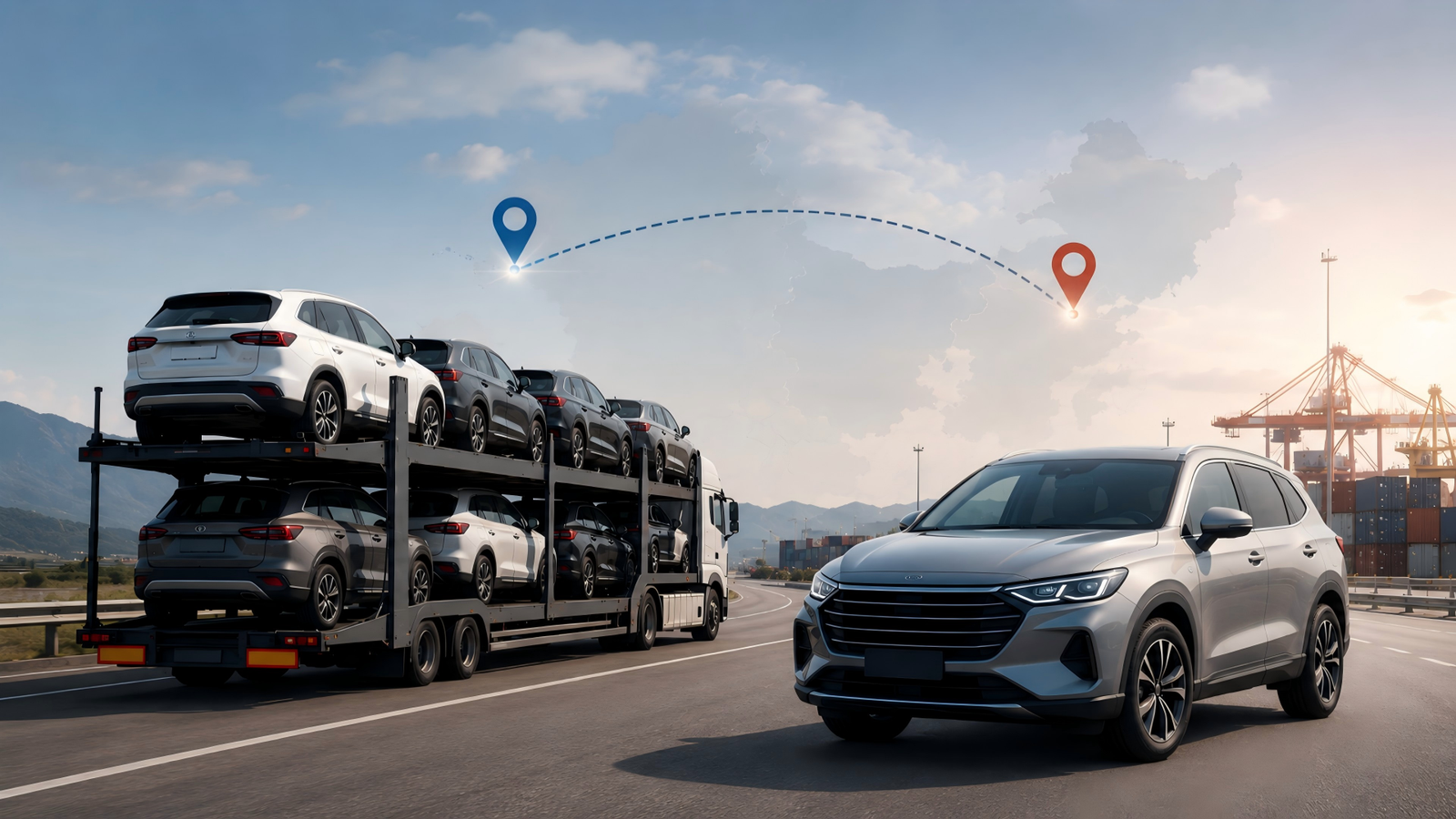
The dynamics within the Russia-China Auto Corridor have transformed dramatically over the past 24 months. What used to be a transit route heavily clogged with heavy machinery components and aftermarket repair kits has matured into a highly specialized logistics highway for ready-to-drive vehicles.
1.1 From CKD Assembly Lines to Direct Vehicle Imports
Historically, local distributors preferred importing separate automotive components to take advantage of lower customs duties on parts versus whole units. However, by 2026, the operational cost of maintaining local CKD assembly lines has skyrocketed. Tooling maintenance, labor inflation, and the lack of specialized manufacturing equipment locally have disrupted the economic viability of regional assembly, shifting the spotlight entirely onto premium finished imports.
1.2 Why the Traditional Parts Supply Chain is No Longer Enough
Relying on a fragmented parts supply chain introduces massive vulnerability. A single missing microchip or specialized wire harness can stall an entire fleet or dealership lot for months. Within the high-velocity trade of the Russia-China Auto Corridor, commercial buyers can no longer afford the downtime associated with sorting, warehousing, and assembling individual components.
2. Economic Driving Forces: Why Finished Vehicles Beat Parts Sourcing
When analyzing the modern automotive market, the financial math has shifted. Sourcing finished units from China is proving to be a much more lucrative corporate strategy than purchasing bulk components.
2.1 Total Cost of Ownership (TCO) and Tariffs Analysis
While tariff structures historically protected local assembly, recent bilateral trade updates along the Russia-China Auto Corridor have standardized clearance procedures for complete vehicles. When calculating the Total Cost of Ownership (TCO)—including freight insurance, multi-modal tracking, and immediate asset depreciation—importing a factory-certified, fully assembled vehicle from China yields a 12-15% higher profit margin for B2B distributors compared to local rebuilding strategies.
2.2 Speed-to-Market: Reducing Transit and Assembly Downtime
In the B2B vehicle procurement space, time is literally money. A finished vehicle clearing customs along the northern borders can be loaded directly onto a car carrier and delivered straight to a dealership floor or corporate fleet yard. By eliminating the middle steps of regional manufacturing or extensive parts-matching, automotive importers cut their time-to-market from 60 days down to less than 14 days.
3. Technical and Regulatory Triggers Accelerating the Shift
The technical nature of modern vehicles is perhaps the strongest catalyst forcing buyers to transition away from individual parts sourcing.
3.1 The Complexity of Smart EV/EREV Component Diagnostics
We are no longer dealing with simple internal combustion engines. The massive surge in demand for Chinese Smart EVs and Extended Range Electric Vehicles (EREVs) means that cars are now supercomputers on wheels. High-voltage battery packs, thermal management systems, and advanced driver-assistance systems (ADAS) cannot be reliably assembled or repaired using piece-by-piece aftermarket parts. They require sterile, factory-grade calibration that can only be guaranteed by importing complete, finished units.
3.2 2026 Certification and Compliance Standardization Across the Border
Cross-border technical regulations have tightened significantly. Navigating custom clearance now requires comprehensive data compliance and strict traceability certificates. Trying to clear custom borders with hundreds of individual components requires endless regulatory paperwork for each part number. Conversely, a finished vehicle carries a singular, unified VIN (Vehicle Identification Number) compliance profile, making customs border passage seamless and risk-free.
4. Future Outlook: What This Paradigm Shift Means for B2B Buyers
As the Russia-China Auto Corridor continues to break logistics volume records, the B2B purchasing paradigm must adapt to remain competitive.
4.1 Mitigating Geopolitical and Logistics Risks in 2026
Success in 2026 relies entirely on supply chain resilience and agility. Rather than tying up precious corporate capital in massive warehouses filled with stagnant spare parts, smart automotive brokers are switching to a "Just-In-Time" finished vehicle procurement model. This mitigates the risk of holding obsolete inventory and allows businesses to quickly pivot their stock based on real-time market demands.
4.2 How Hanhai U-CAR Streamlines Finished Vehicle Sourcing
Navigating this massive industrial shift requires a trusted trade partner who understands the ground realities of international logistics. At Hanhai U-CAR (hhucar.com), we have optimized our export infrastructure specifically to support bulk finished vehicle procurement. From strict quality traceabilty inspections to secure cross-border payment compliance, we bridge the gap between premium Chinese automotive inventory and international commercial buyers.
Whether you are looking to upgrade a corporate fleet or restock a dealership network, our direct-to-destination finished vehicle solutions eliminate the headache of parts assembly, ensuring your business stays ahead of the curve in the rapidly evolving global market.