
Industry updates and market insights on global used car trade, buyer demand, and cross-border export opportunities.
Key Takeaways
- Navigating the energy transition requires a calculated dual-inventory approach, not abandoning internal combustion engine (ICE) vehicles overnight.
- Chinese used ICE and PHEV vehicles offer immense ROI, immediate liquidity, and are easily serviceable in emerging markets.
- A recommended 2026 strategy for emerging markets is a 70/30 split (ICE/Hybrid vs. EVs) to balance cash flow with future-proofing fleet decarbonization.
1. What Does Navigating the Energy Transition Mean for Auto Importers?
For B2B buyers and dealership networks, navigating the energy transition does not mean abandoning traditional vehicles overnight. Instead, it requires a calculated approach to inventory management. It means understanding exactly when to leverage the proven profitability of gas-powered cars and when to capitalize on the growing demand for affordable electric mobility.
1.1 The 2026 Clash Between Green Policies and Market Realities
While regions like the European Union are pushing aggressive zero-emission mandates, the reality on the ground in the Middle East, Africa, Latin America, and Central Asia tells a different story. In these emerging markets, charging infrastructure remains localized, and grid stability can be unpredictable. Consequently, a "one-size-fits-all" approach to importing cars is a risky business model. Successful auto sourcing in 2026 requires acknowledging this clash and building a highly adaptable supply chain.
2. The Enduring Power of Chinese Used ICE Vehicles
Despite the global buzz around electrification, internal combustion engine (ICE) vehicles remain the undeniable backbone of auto trade in developing regions. For B2B importers, traditional gas-powered cars offer immediate liquidity and stable profit margins.
2.1 High ROI and Reliability in Emerging Markets
The primary advantage of sourcing Chinese used ICE vehicles is their incredible return on investment (ROI). These vehicles are heavily depreciated in the Chinese domestic market, allowing global buyers to acquire low-mileage, modern SUVs and sedans at a fraction of their original cost. Furthermore, ICE vehicles are easily serviceable. Local mechanics across Africa and Central Asia possess the expertise and aftermarket parts to keep these cars running, ensuring high customer satisfaction and low warranty risks for importers.
2.2 Top-Performing Gas and Hybrid Models for 2026
In 2026, we are seeing massive B2B demand for robust SUVs and reliable plug-in hybrid electric vehicles (PHEVs) from top Chinese brands like Geely, Changan, and BYD. Hybrids, in particular, act as the perfect bridge technology. They offer buyers the fuel efficiency of an EV without the range anxiety, making them an easy sell in markets with limited charging stations.
3. Scaling Up with High-Quality Chinese Used EVs
While ICE vehicles provide stability, the future undeniably leans electric. Forward-thinking fleet managers are already scaling up their EV operations. China, possessing the world’s largest and most advanced EV market, is the premier source for high-quality, affordable used electric vehicles.
3.1 Lowering Total Cost of Ownership (TCO) for Fleet Operations
For ride-hailing companies (like Uber or local equivalents) and last-mile logistics fleets, the math heavily favors EVs. While the initial import cost might be slightly higher, the Total Cost of Ownership (TCO) drops dramatically over a 3-to-5-year cycle. Electricity is generally cheaper than gasoline, and EVs have significantly fewer moving parts, slashing routine maintenance costs.
3.2 Ensuring Battery Health and Export Compliance
The biggest hesitation buyers face when importing used EVs is battery degradation. A crucial part of safely navigating the energy transition is mitigating this risk. Working with professional Chinese exporters who provide verified State of Health (SOH) certificates ensures you are importing vehicles with 80%+ battery life, meeting strict international customs regulations and satisfying your end-users.
4. Building a Resilient "Dual-Inventory" Strategy
The most successful global auto importers in 2026 are not choosing between gas and electric; they are choosing both. Successfully navigating the energy transition requires a "Dual-Inventory" strategy.
4.1 How to Balance ICE and EV Sourcing in 2026
We recommend that B2B buyers structure their inventory based on their specific local infrastructure. A common 2026 strategy for emerging markets is a 70/30 split:
- 70% ICE and Hybrid Vehicles: To generate consistent cash flow, serve rural/suburban customers, and maintain a low-risk baseline.
- 30% Used EVs: Targeted specifically at urban ride-hailing fleets, government procurement contracts, and eco-conscious early adopters.
As local charging infrastructure matures, importers can gradually adjust this ratio without disrupting their core business.
5. Streamlining Your Auto Imports with a Reliable Sourcing Partner
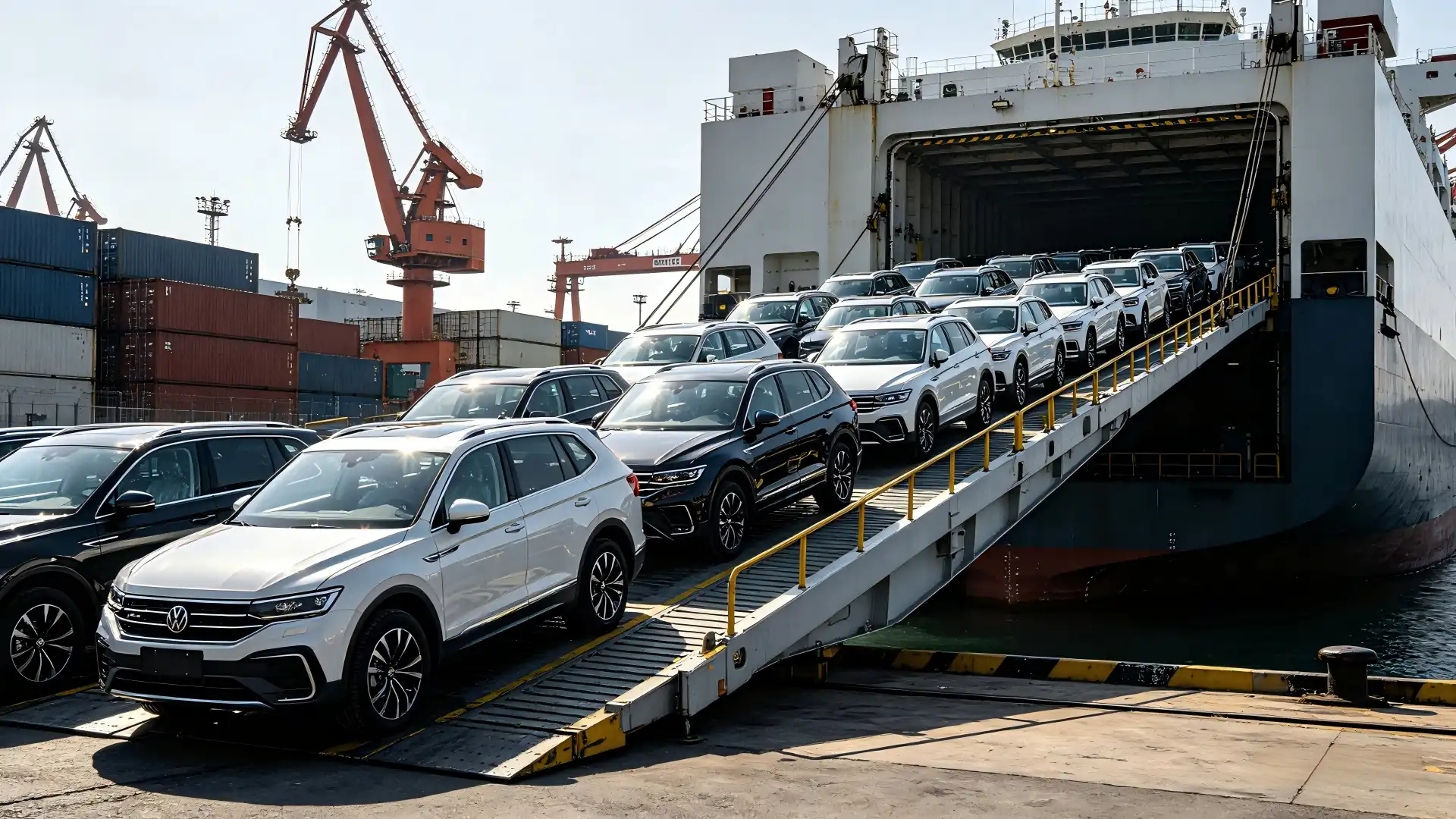
Ultimately, navigating the energy transition and managing a complex dual-inventory strategy requires a partner you can trust. Sourcing vehicles from China involves navigating language barriers, complex export licenses, RoRo shipping logistics, and varying destination customs requirements.
Partnering with an experienced Chinese auto export platform ensures that whether you are buying 10 reliable gasoline SUVs or a fleet of 50 used EVs, every vehicle is rigorously inspected, fully compliant, and shipped efficiently.