
Industry updates and market insights on global used car trade, buyer demand, and cross-border export opportunities.
Key Takeaways
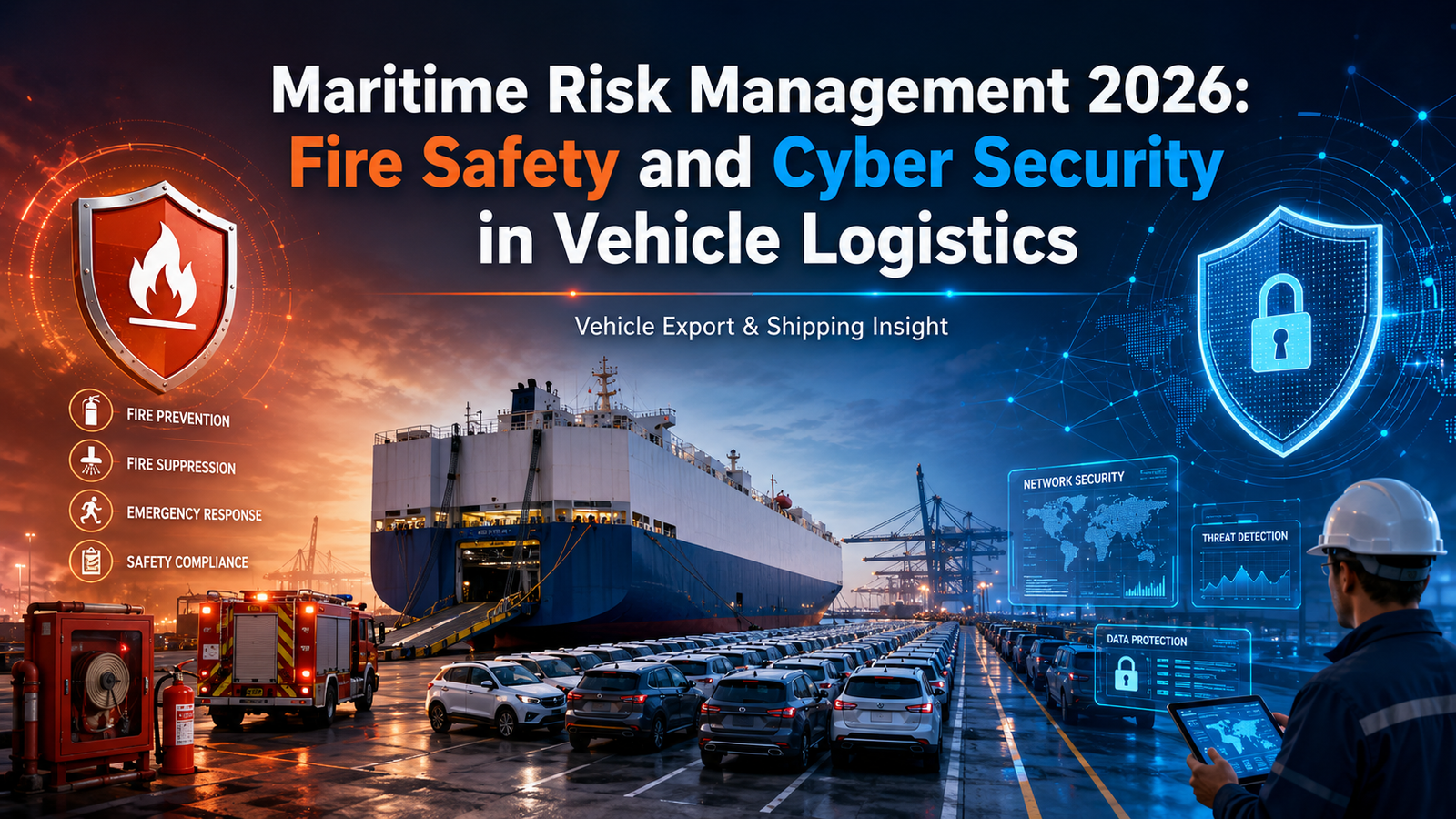
- The shift to high-density EVs requires strict State-of-Charge (SoC) limits (max 30%) and mandatory SOH verification to prevent catastrophic maritime thermal runaway events.
- Modern vehicle cargo isn't just machinery; it's mobile computers. Logistics networks must actively defend against OTA hacking and GPS spoofing during ocean transit.
- Compliance with cross-border data laws (like China’s PIPL) is now a logistical necessity to prevent port rejections and severe customs penalties.
1. The Evolution of Vehicle Shipping: Why 2026 is a Turning Point
1.1 The Surge of High-Density EVs and Smart Connected Cars
The global automotive trade is undergoing a radical transformation. As B2B importers shift their procurement from traditional Internal Combustion Engine (ICE) vehicles to high-density Electric Vehicles (EVs) and smart connected cars, the risk profile of ocean freight has completely changed. Old logistics models are no longer sufficient. Today's vehicle cargo is essentially a massive collection of high-capacity lithium batteries and advanced mobile computers, requiring a modernized approach to safe maritime transit.
2. Fire-Safe Logistics: Mitigating Thermal Runaway Risks at Sea
A cornerstone of Maritime Risk Management 2026 is addressing the severe threat of EV battery fires. Unlike standard cargo fires, lithium-ion thermal runaway events burn hotter, spread faster, and are incredibly difficult to extinguish using traditional maritime firefighting methods.
2.1 Strict State-of-Charge (SoC) Limits and Battery Health Verification
To minimize combustion risks, global shipping lines and port authorities have implemented stringent State-of-Charge (SoC) limits. In 2026, the logistics standard dictates that EVs must not exceed a 30% charge level prior to loading. Furthermore, providing accurate State of Health (SOH) certificates is now a mandatory step. If a used EV has a compromised battery, it poses a direct threat to the entire vessel. Verifying battery stability pre-shipment is a buyer's first line of defense.
2.2 Advanced Onboard Fire Monitoring and Suppression Systems
Modern Ro-Ro (Roll-on/Roll-off) vessels and container ships are rapidly upgrading their safety infrastructure. Relying solely on crew patrols is obsolete. Today, secure vehicle logistics rely on AI-driven thermal cameras capable of detecting abnormal temperature spikes before a fire even ignites. Additionally, specialized EV fire blankets and water-mist suppression systems designed specifically for chemical fires are becoming mandatory requirements for carriers transporting new energy vehicles.
3. Cyber-Secure Shipping: Protecting Smart Vehicles from En-Route Threats
While physical fire safety is paramount, digital security has emerged as the second critical pillar of modern vehicle logistics.
3.1 Identifying Cyber Vulnerabilities in Maritime Transit
Modern smart vehicles are highly computerized and continuously seeking network connections. While sitting at export terminals or aboard vessels, these vehicles can be vulnerable to remote hacking, unauthorized Over-The-Air (OTA) software updates, or GPS spoofing. If a vehicle's operating system is compromised during transit, it can lead to operational failures upon arrival or even severe corporate data breaches for the importing fleet.
3.2 Compliance with Cross-Border Data Regulations (PIPL & GDPR)
Mitigating cyber risk is heavily tied to international legal compliance. Exporters leaving China must strictly navigate the Personal Information Protection Law (PIPL), ensuring that domestic vehicle data is properly localized, sanitized, or wiped before export. Similarly, vehicles entering Europe must meet GDPR standards. Failure to secure and anonymize smart vehicle data can result in port rejections, customs penalties, and prolonged supply chain delays.
4. Strategic Procurement: Integrating Maritime Risk Management 2026 into Your Supply Chain
For B2B auto importers, adapting to these changes means restructuring how you source and ship vehicles. Executing effective Maritime Risk Management 2026 requires aligning with the right partners and securing the right protections.
4.1 Partnering with Certified Logistics and Freight Operators
When vetting shipping partners, global buyers must look beyond just freight rates. It is crucial to select logistics operators who hold valid certifications for hazardous goods (such as Class 9 for lithium batteries) and have proven track records in handling smart vehicles. Ask your forwarders about their specific protocols for EV stowage and cyber-secure handling at transit hubs.
4.2 Updating Maritime Insurance for Complex Vehicle Cargo
Traditional marine cargo insurance often falls short in the modern era. Importers need comprehensive coverage that explicitly includes clauses for EV thermal runaway events and cyber-liability. Ensuring your policies cover both physical battery damage and software-related transit losses is a vital financial safeguard for any modern fleet.
5. The Hanhai U-CAR Advantage: Secure Global Delivery Guaranteed
Navigating the complexities of cross-border vehicle trade requires a partner who anticipates challenges before they arise. At hhucar.com, we seamlessly integrate comprehensive Maritime Risk Management 2026 strategies into our B2B export services.
From rigorous battery SOH testing and 30% SoC compliance, to ensuring PIPL data sanitization for smart vehicles, Hanhai U-CAR guarantees that your inventory is protected against both fire and cyber risks. Partner with us to secure your supply chain and deliver vehicles globally with absolute confidence.