
Industry updates and market insights on global used car trade, buyer demand, and cross-border export opportunities.
Key Takeaways
- Sourcing commercial vehicles in 2026 has shifted from legacy Western brands to highly agile, cost-effective Chinese fleets serving global infrastructure booms.
- Chinese heavy machinery offers a massive 20% to 35% TCO advantage while integrating smart telematics, AI safety systems, and alternative fuel options.
- Successful B2B procurement requires mitigating compliance risks through exact emission verification and partnering with exporters who provide robust "1+3" after-sales service ecosystems.
1. The Global Shift: Why Emerging Markets are Flocking to Chinese Commercial Fleets
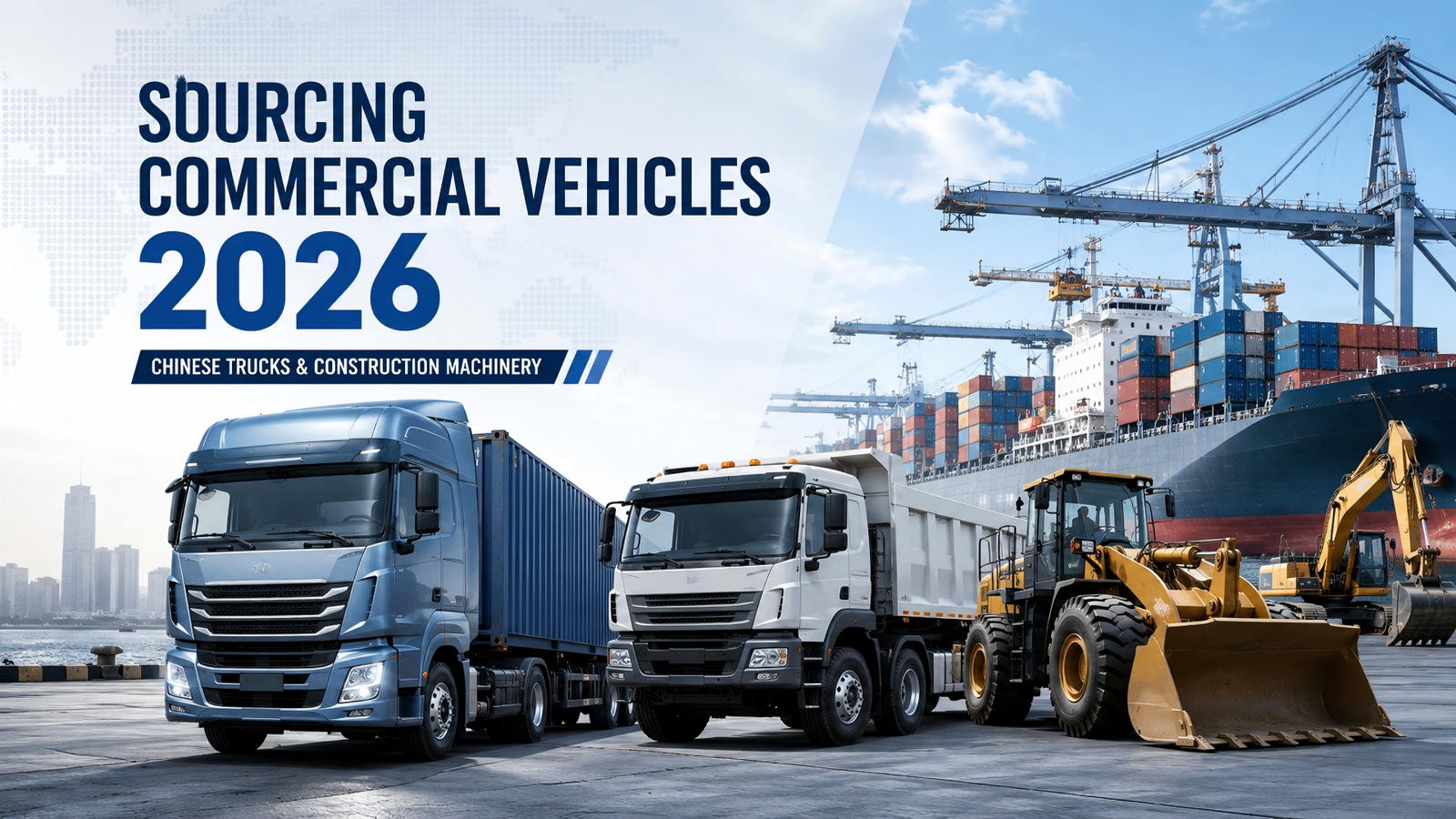
The landscape of global logistics and heavy industry is undergoing a massive realignment. For international procurement managers, sourcing commercial vehicles 2026 represents a turning point where traditional Western dominance is giving way to highly agile, cost-effective alternatives. Emerging economies are no longer treating Chinese brands as a second-tier budget option; instead, they are anchoring their multi-million-dollar infrastructure projects around them.
1.1 Infrastructure Booms in the Middle East, Africa, and LATAM
From the massive urban developments in the GCC region to mining expansions across Latin America and logistical corridors in Africa, the demand for heavy-duty hardware is at an all-time high. Driven by aggressive national development plans, local contractors require massive fleets of reliable assets immediately. Chinese automotive groups have strategically positioned themselves to meet this demand, offering tailored vehicle configurations that thrive in harsh desert climates and high-altitude mining environments alike.
1.2 Overcoming Traditional Supply Chain Bottlenecks
Historically, sourcing heavy machinery from legacy European or American manufacturers meant dealing with rigid pricing, multi-month production backlogs, and inflexible financing. In 2026, Chinese manufacturers have turned supply chain agility into a competitive weapon. By maintaining robust production volumes and highly integrated shipping networks, they offer massive lead-time advantages, allowing global buyers to scale up projects without costly logistical delays.
2. Unpacking the Competitive Edge of Chinese Trucks and Heavy Machinery
To successfully navigate sourcing commercial vehicles 2026, fleet managers must look beyond just the initial purchase price. The massive surge in import volumes is heavily backed by a profound leap in engineering maturity and product quality.
2.1 Heavy-Duty Performance Meets Cost Efficiency
The modern generation of Chinese dump trucks, tractor units, and excavators delivers an exceptional Total Cost of Ownership (TCO). Brands like Shacman, Sinotruk, and XCMG have optimized their drivetrains to match or exceed the fuel efficiency and structural durability of traditional industry benchmarks. When calculating the cost per operating hour, Chinese commercial hardware frequently offers a 20% to 35% cost advantage, allowing B2B buyers to maximize their capital expenditures and boost project ROI.
2.2 Technological Evolution: Smart Cabins, Telematics, and Alternative Fuel Options
China’s commercial vehicle sector has leapfrogged standard mechanical designs by aggressively integrating digital technology. Today's export models feature advanced fleet telematics, factory-installed AI safety systems (such as lane assistance and driver fatigue monitoring), and highly ergonomic cabin designs. Furthermore, as global sustainability mandates tighten, China leads the market in exporting electric, hybrid, and hydrogen-powered heavy trucks, giving forward-thinking importers a future-proof fleet solution.
3. Strategic Logistics & Compliance for Sourcing Commercial Vehicles 2026
While the market opportunities are immense, executing a smooth cross-border transaction requires a deep understanding of evolving international regulations, shipping protocols, and long-term asset management.
3.1 Navigating Local Emission Standards and Age Limits
Compliance remains the ultimate gatekeeper in international vehicle trade. Importers must align their procurement with their specific country's regulatory framework—whether that means complying with strict Euro 6 standards in certain metropolitan zones or navigating the strict used-vehicle age limits imposed by GCC and African customs ports. Verifying the exact emission classifications and export traceability documentation at the origin is critical to avoiding catastrophic port rejections.
3.2 Ensuring Spare Parts Availability and After-Sales Support
The most critical factor in commercial fleet reliability is minimizing downtime. A truck sitting in a yard waiting for a simple valve replacement drains profitability. Savvy B2B buyers mitigate this risk by partnering with exporters who offer comprehensive "1+3" service models—ensuring a continuous supply chain of genuine spare parts, regional component warehousing, and accessible technical training for local maintenance crews.
4. Conclusion: Maximizing ROI in Your 2026 B2B Procurement Strategy
The growing global demand for Chinese heavy machinery is a structural market shift built on tangible technological progress, unmatched manufacturing speed, and superior cost efficiency. For cross-border enterprises, success boils down to choosing the right supply chain ally.
By working with an established, transparent vehicle export gateway like Hanhai U-CAR (hhucar.com), international buyers can confidently navigate quality verification, secure cross-border payment escrows, and streamline complex shipping logistics. Position your fleet for growth this year by turning the efficiency of Chinese engineering into your primary operational advantage.