
Industry updates and market insights on global used car trade, buyer demand, and cross-border export opportunities.
Key Takeaways
- The 25-Year Rule exemption is strictly tied to the exact Month of Manufacture, not just the general model year. Arriving a day early risks seizure.
- 2026 legally unlocks highly coveted 2001 JDM legends, including the Honda Integra Type R (DC5) and the Mitsubishi Lancer Evolution VII.
- Federal exemption does not guarantee state-level compliance. Buyers in states like California face expensive CARB certification challenges for imported vehicles.
1. Demystifying the 25-Year Rule: The Month of Manufacture Trap
Under regulations set by the National Highway Traffic Safety Administration (NHTSA) and the Environmental Protection Agency (EPA), non-US market vehicles that are at least 25 years old are officially exempt from strict DOT safety standards and EPA emissions testing, making them federally legal to import and drive on US roads.
⚠️ The Fatal "Month of Manufacture" Trap
This is where countless first-time importers make a very expensive mistake. As we heavily emphasize throughout this 2026 US JDM Import Guide, the 25-year clock is calculated down to the exact Month of Manufacture, not just the general model year.
For example, if your 2001 Honda Integra Type R DC5 rolled off the assembly line in August 2001, it is not legal to enter the US until August 1, 2026. If it arrives at a US port even one day early, Customs and Border Protection (CBP) has the authority to seize, impound, or even crush the vehicle. Following the verification steps outlined in this 2026 US JDM Import Guide will ensure you don't fall victim to this common rookie mistake. Always demand that the Japanese exporter provides a clear photo of the vehicle’s VIN plate!
2. The Class of 2001: 12 JDM Legends Finally Street-Legal
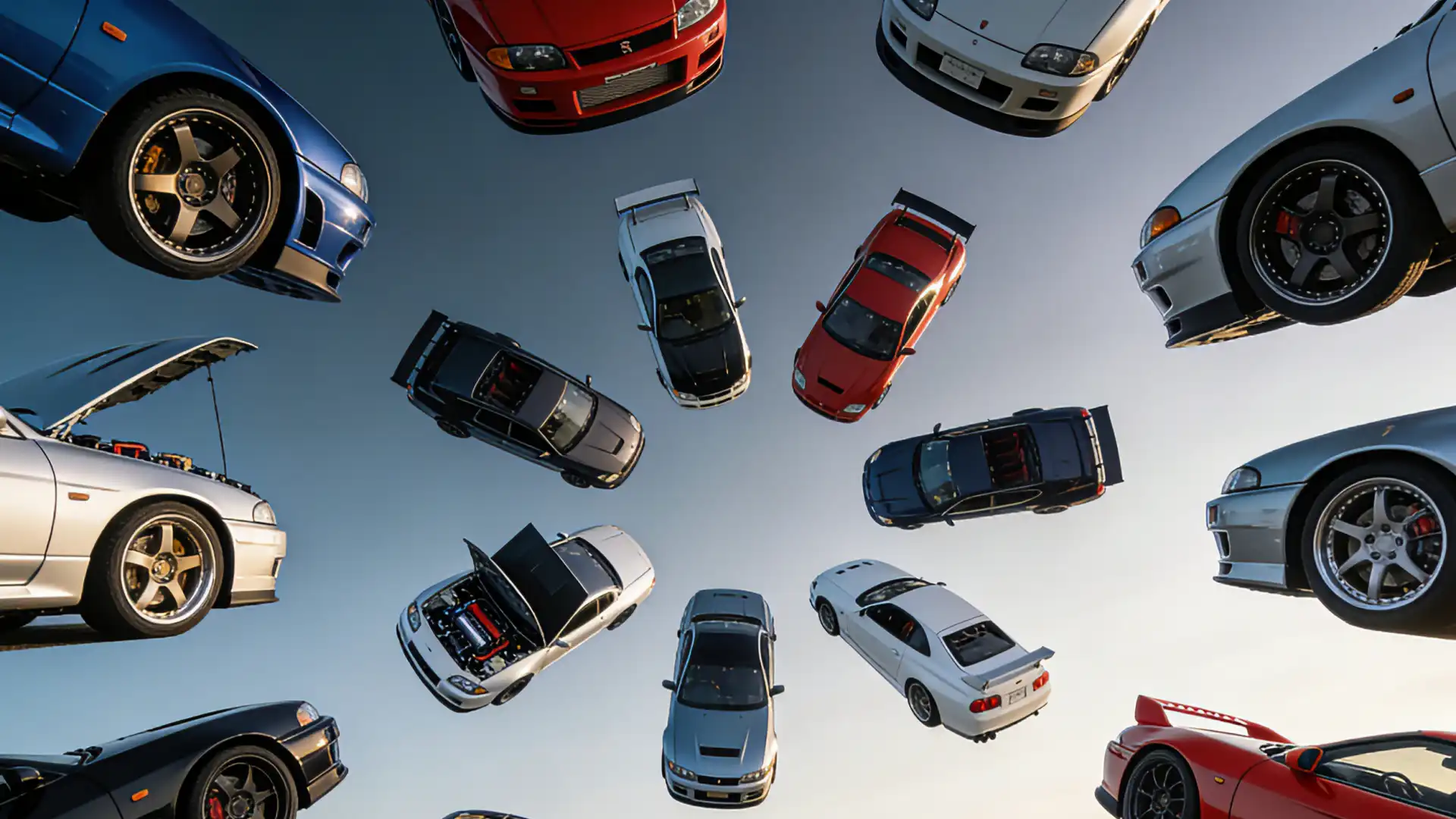
The year 2001 was the twilight of the Japanese automotive golden age. No 2026 US JDM Import Guide would be complete without highlighting these 12 newly unlocked classics that absolutely deserve a spot in your garage this year:
Track Weapons & Mountain Carvers
- Honda Integra Type R (DC5): Debuting in July 2001, this front-wheel-drive king introduced the legendary K20A engine pushing 220 horsepower with a redline screaming to 8,400 rpm.
- Mitsubishi Lancer Evolution VII (CT9A): Released in February 2001, the Evo 7 introduced the Active Center Differential (ACD). For rally fans who cannot wait for the Evo 8 or 9, this is the ultimate pickup.
- Honda Civic Type R (EP3): Hitting the Japanese market in late 2001, this quirky "breadvan" hides immense driving purity and the raw performance of the K20A engine.
- Mazda RX-7 (FD3S) Type R Bathurst R: A limited-edition release in August 2001 boasting exclusive carbon fiber interior trim and massive collector value.
Ultimate GTs & Icons
- Nissan Skyline GT-R (R34) M-Spec: Introduced in May 2001. The M-Spec offered a more mature, luxurious interior and uniquely tuned dampers. It is the absolute pinnacle of JDM investment pieces.
- Nissan Silvia (S15) Spec-R (2001 Batch): The pristine, late-production 2001 models are now clear to cross the border, remaining the ultimate choice for drift enthusiasts.
- Subaru Impreza WRX STI (GDB Bugeye - 2001): The iconic "Bugeye" styling combined with the legendary EJ207 boxer engine. As a top recommendation in our 2026 US JDM Import Guide, this car delivers the rawest rally-inspired driving experience of the early 2000s.
- Honda NSX (NA1/NA2 2001 Pop-Up Finale): 2001 was the final curtain call for the iconic pop-up headlights on the NSX. These command incredible premiums in the North American market.
Quirky Tastes & VIP Sleepers
- Toyota Mark II (JZX110): Powered by the legendary 1JZ-GTE engine, a highly capable four-door drift sedan.
- Nissan Stagea (M35): Released in October 2001. A wagon that swallows luggage while delivering the punch of a VQ-series engine.
- Toyota Crown Athlete V (S170 Series): Blending ultra-luxurious Japanese VIP styling with a potent turbocharged engine.
- Nissan Cima (F50): Arriving in early 2001 with its unmistakable Gatling-gun-style headlights and a buttery smooth V8.
3. The Paperwork Labyrinth: Essential Forms for CBP Clearance
If you are attempting a DIY import, the paperwork can be overwhelming. A core pillar of our 2026 US JDM Import Guide is ensuring you have these "golden tickets" perfectly filled out before the ship docks:
- DOT Form HS-7: Your declaration to the Department of Transportation. Check Box 1, declaring the vehicle is at least 25 years old.
- EPA Form 3520-1: For the Environmental Protection Agency, use Exemption Code E, stating the vehicle is over 21 years old and remains in its original configuration.
- CBP Form 7501 (Entry Summary): Required to calculate and pay your 2.5% import duty.
- Export Certificate & Certified Translation: You need the original Japanese deregistration document and an official English translation to secure your US title.
4. State-Level Nightmares: The California CARB Challenge
We must address a harsh reality for buyers on the West Coast, which is a vital warning included in this 2026 US JDM Import Guide: Federal customs exemption does not equal state-level DMV exemption.
For enthusiasts living in Los Angeles and throughout California, the California Air Resources Board (CARB) completely ignores the federal 25-Year Rule. In California, only gasoline-powered vehicles produced in 1975 or earlier are exempt from strict smog testing. This means legally registering your 2001 Evo 7 with the California DMV will require sending the car to a specialized CARB certification lab. This compliance process often costs upwards of $10,000 to pass independent emissions testing.